 Skip to content


- Understanding Study Procrastination
- The T.R.Y. Method to Overcome Procrastination
- Building Long-Term Study Habits
- Recap
Feeling stressed about upcoming tests or projects? Struggling to start studying or completing assignments? You’re not alone. Many students procrastinate studying for their exams which lead to last-minute cramming and increased anxiety. Understanding the reasons behind procrastination and implementing effective strategies can help you overcome procrastination and regain control over your academics.
Understanding Study Procrastination
Procrastination isn’t just about laziness; it’s often rooted in deeper issues.
Procrastination isn’t just about laziness; it’s often rooted in deeper issues. Here are four common reasons students procrastinate:
1. Competing Priorities
Balancing a seven-hour school day, assignments due the next day, personal time, and family commitments can push studying for future exams down the priority list.
2. Established Habits
If cramming the night before has worked in the past, you might think, “If it’s not broken, why fix it?” However, this habit can lead to increased stress and lower retention.
3. Feeling Overwhelmed
Test anxiety is real. Studies show that stress and anxiety can impair your ability to retain and apply information. Sometimes, avoiding studying feels like a relief, even if it’s counterproductive.
4. Uncertainty on Where to Start
Without clear guidance, such as a study guide, determining what to study can be daunting. The abundance of notes, classwork, and homework can make it hard to begin.
The T.R.Y. Method to Overcome Procrastination
To tackle study procrastination, use the T.R.Y. method:
Step 1. Tweak Your Deadlines
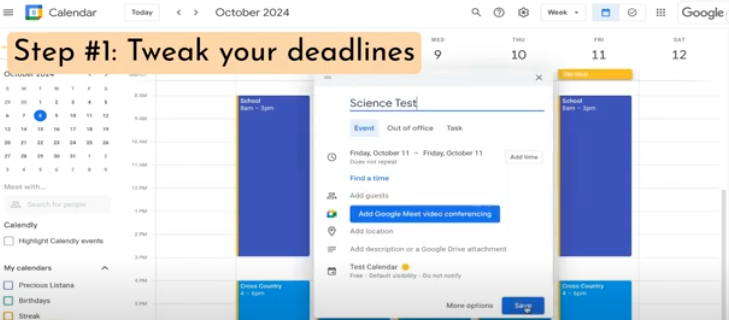
Procrastination often stems from the illusion of never-ending time. By setting earlier personal deadlines, you create a sense of urgency. For instance, if your Science test is on Friday, you can schedule study sessions on Tuesday and Thursday. You can also use tools like Google Calendar to set these sessions and receive reminders.
If you’re looking for more ways to manage school tasks efficiently, this is a great time to explore practical tech strategies—read our blog on 3 Tech Tips to Help You Get Organized for School to make your daily routines smoother and more manageable.
Step 2. Resume with Small Tasks
Starting is often the hardest part.
Starting is often the hardest part. To overcome that, try breaking down your study material into manageable tasks. You can create a checklist in a Google Doc and list items like “Review Chapter 1 notes” or “Create flashcards for key terms.” Checking off these tasks can provide a sense of accomplishment and motive you to continue.

Step 3. Reward Yourself
Tie in rewards to make studying more appealing. After completing a study session, treat yourself to 15 minutes of social media, a favorite snack, or a short walk. These immediate rewards can create positive reinforcement, making it easier to maintain study habits.
Building Long-Term Study Habits
Consistency is key.
Overcoming procrastination is a gradual process. Consistency is key. By regularly applying the T.R.Y. method and additional strategies, you can develop effective study habits that improve academic performance.
For more tips on building planning skills, check out our blog on How to Coach Teens to Build Planning Skills During School Breaks.
Recap
Procrastinating on studying is a common challenge, but with the right strategies, it’s manageable. Using the T.R.Y. method can significantly reduce procrastination. Remember, the goal is progress, not perfection. You can:
- Tweak your deadlines
- Resume with small tasks
- Reward yourself
If you’re interested in personalized support to overcome procrastination and improve your study skills, you can read The Secret to Helping Any Student with Executive Function Tutoring.


