 Skip to content

- When Focus and Stillness Feel Impossible
- When Actions and Time Move Faster Than Thought
- When Emotions Run Louder Than the Moment Calls For
- When Starting and Staying Organized Feel Like a Wall
- When Focus Won’t Shift and Sleep Won’t Come
- What to Do With This List
You’re talking to your teen. They’re looking right at you, nodding along, maybe even saying “uh huh.” Two minutes later, they ask you to repeat the exact thing you just said. If that sounds familiar, you’re not imagining it, and it’s not attitude. It might be one of 10 subtle signs of ADHD in teens that most parents completely miss, because on the outside, everything looks fine.
Before we get into it: nothing on this list is a diagnosis. ADHD can only be identified through a formal evaluation by a qualified professional. Think of these 10 signs as notes you’re collecting about your teen, not conclusions you’re making. If three or four of them feel familiar, that’s worth bringing up with your teen’s doctor, counselor, or school team. It’s not a reason to panic. It’s simply information.
When Focus and Stillness Feel Impossible
Sign #1: Listening but not absorbing.
Your teen wasn’t trying to ignore you. Their brain just quietly drifted somewhere else, and the tricky part is that everything on the outside still looks like they’re listening. Eye contact, nodding, an “uh huh” here and there. All the signals that say “I’m tracking this,” without the actual tracking happening underneath. Here’s an easy way to test for it at home: next time you give your teen a two or three step instruction, don’t repeat it. Just ask them to tell you back what you said, in their own words. If they pause, look uncertain, or only catch one out of three steps, that’s the gap.
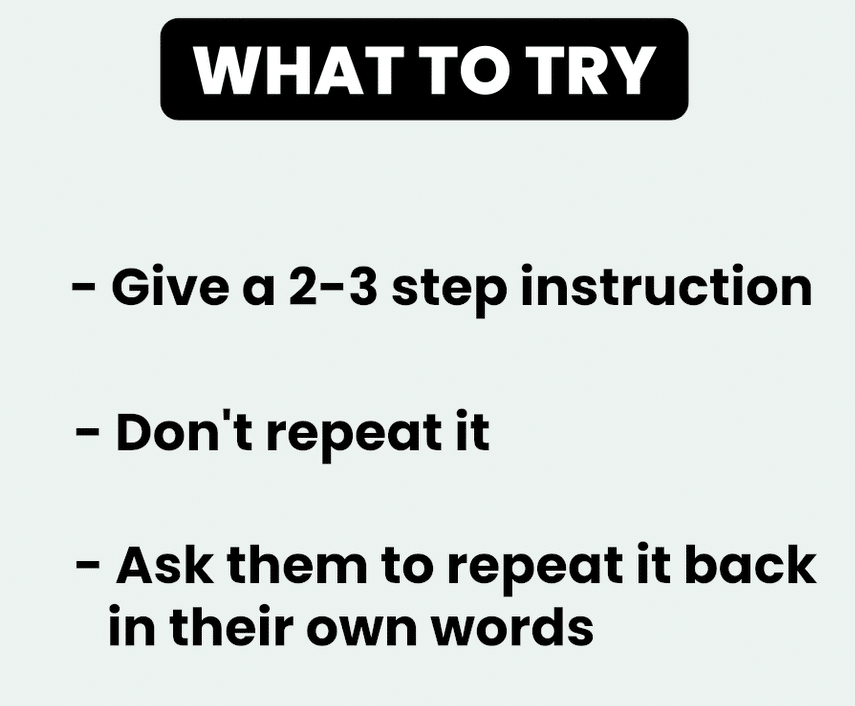
Nodding along is not the same as taking it in. That’s not attitude, it’s what inattentive ADHD can look like in a teen who has learned that nodding gets them through most conversations.
Sign #2: Constant need for movement.
In teenage boys, hyperactivity tends to be loud and visible: bouncing a knee, tapping a pen, tipping a chair back, getting up in the middle of class because sitting still for ten minutes feels physically impossible. That’s the version most people picture, and it’s part of why boys get flagged and evaluated far more often than girls.
In teenage girls, that same restlessness often goes inward. She’s not bouncing off the walls. She’s talking nonstop, interrupting, or needing background noise just to sit through homework because total silence feels impossible. Both teens have the same wiring underneath. Your teen’s need for movement isn’t defiance, it’s their nervous system trying to regulate itself so it can focus. Instead of asking them to sit still, try connecting tasks to movement: reviewing flashcards while pacing, or studying with music instead of fighting the urge for noise.

When Actions and Time Move Faster Than Thought
Sign #3: Acting before thinking it through.
In teenage boys, this often shows up physically, like riding a bike without a helmet because grabbing it felt like one extra step. In teenage girls, it tends to show up socially and verbally: blurting something out in the group chat and immediately regretting it, or oversharing something personal and replaying it for the rest of the day. Both versions come from the same root.

Their brain acts before the brakes have a chance to kick in. It’s not a character flaw and it’s not poor judgment, it’s a timing gap between impulse and pause. One way to help: next time you’re shopping together, tell your teen you’ll buy the item if you both still want it after five minutes. That small pause is often all their brain needs.
Sign #4: Can’t feel how time passes.
They say “I’ll do it in five minutes,” and twenty five minutes go by. They tell you homework will take twenty minutes and it takes two hours. Or the opposite happens: a project feels so big they never start it at all. ADHD researcher Dr. Russell Barkley calls this time blindness. The internal clock most of us use to sense how much time has passed just doesn’t run the same way in an ADHD brain. It’s not that they don’t care, they genuinely cannot feel time the way neurotypical brains do. External timers tend to help more than internal willpower here. Next time your teen says “give me five minutes,” ask them to set an actual timer on their phone. It turns five minutes from a guess into something they can see.

When Emotions Run Louder Than the Moment Calls For
Sign #5: Highs too high, lows too low.
A small change of plans, like dinner getting pushed back twenty minutes, can wreck their whole evening. That might look like your teen snapping the moment you ask them to unload the dishwasher, or disappearing into their room for the rest of the night, not out of defiance, but because their nervous system is already full and even a small request feels like too much. What actually helps in those moments is co-regulation: your calm becomes the signal that it’s safe to come back down. Lower your own voice, stay nearby without pushing for a conversation, and name what you see without judgment: “I can see you’re overwhelmed right now. I’m here when you’re ready.”
Their emotional volume knob is set differently, and it takes more effort for them to bring it back down on their own.

Sign #6: Small rejections feel huge.
A friend takes an hour to text back, and suddenly your daughter is convinced the whole friend group hates her. A B+ feels, to her, like she failed. In girls this often shows up as visible hurt: tears, withdrawal, spiraling thoughts about what she did wrong. But girls with ADHD are also more likely to mask it, going quiet or giving one-word answers instead. In boys, the same intensity often gets covered up differently, showing up as anger or an “I don’t even care” that isn’t true underneath. ADHD psychiatrist Dr. William Dodson coined a term for this: rejection sensitive dysphoria. For a lot of people with ADHD, criticism or rejection doesn’t just sting, it hits like a much bigger blow than the moment calls for, because of how ADHD affects the brain’s emotional response. What helps most isn’t talking your teen out of the feeling in the moment. Once things have calmed down, try: “I’m not here to tell you your feelings are wrong. I just want to understand what that felt like for you.”
When Starting and Staying Organized Feel Like a Wall
Sign #7: Knows what to do, but cannot start.
We worked with a varsity athlete, we’ll call him Marcus, whose coach would ask him to run sprints and he was off the line in half a second. His teachers would ask him to start an English essay, and he’d sit there for 45 minutes doing everything except opening the document. It wasn’t that Marcus didn’t care or was lazy. For a lot of teens with ADHD, starting a “boring” task is the hardest part of the whole thing, even when finishing it would only take twenty minutes. This is called task paralysis, and from the outside it can look identical to procrastination even though what’s underneath is completely different.

Starting a task, not finishing it, is often the hardest part for a teen with ADHD, even when finishing it would only take twenty minutes.
Sign #8: Messy outside, hidden logic inside.
Your teen’s room might look like a disaster, but ask them where something is and there’s often a logic to it, even if it only makes sense to them. That same internal system tends to break down completely when it comes to a backpack: a closed, compressed space where everything layers on top of everything else. Digging through it to find one thing can feel genuinely overwhelming, so they stop digging, and suddenly nothing is where it’s supposed to be. Before introducing a new system, get curious first. Ask your teen to walk you through where things go in their backpack, then pick just one thing to work on together, like a single pocket that becomes the only place homework ever lives. If you’re not sure where to start when the backpack chaos is spilling into missing assignments, this is a good place to begin.

When Focus Won’t Shift and Sleep Won’t Come
Sign #9: Can’t shift gears when needed.
Three hours into a video game or a sketchbook, and they don’t hear you calling for dinner the fifth time. But ask for ten focused minutes on a math worksheet, and it feels impossible. This is one of the most confusing signs for parents, because you have proof your teen can focus when they want to. What’s actually happening is that attention in an ADHD brain is heavily driven by interest. It’s not that they’re choosing to ignore homework, it’s that their brain has a harder time engaging with something that isn’t as compelling.

Sign #10: Struggling with sleep.
Bedtime arrives and their brain doesn’t get the memo. Exhausted all day, and then the second the lights go out, their mind speeds up instead of slowing down: replaying conversations, jumping between thoughts, suddenly remembering everything they forgot to do. This isn’t stalling on purpose. Research has linked ADHD to a delayed body clock and racing thoughts right at bedtime, which is part of why so many teens with ADHD say they feel most awake exactly when they’re supposed to be winding down. It becomes a cycle too, since a tired brain the next day makes every other sign on this list harder to manage.

What to Do With This List
Knowing the signs is one thing. Knowing what to actually do about it for your specific teen is another. That’s exactly why we’re building a back to school program this year, to help families turn signs like these into an actual plan before the new school year starts.
🎯 Back to School Program Waitlist (4th grade – college): https://forms.gle/SxBZbHfRVacFXNkQA
If summer routines have already been a struggle, this piece on helping your ADHD teen thrive in summer is a good next read. And if you want to understand what consistent, in-between-session support actually looks like, here’s how executive function tutoring helps students with ADHD.
Which of these 10 signs sounds most like your teen? Tell us in the comments below.


